

 ChatGPT
 Claude
 Grok
Grok
 Perplexity
 Gemini
★ Key Takeaways
When you pay vendors with a credit card, you hold onto cash until your statement is due instead of the day the invoice lands.
That float can stretch your effective payment window by weeks, easing tight cash-flow stretches.
Suppliers who do not accept cards can still be paid, because Zil Money funds the payment by card and sends a check or ACH.
Card funding adds a clear paper trail and approval controls to every vendor payment.
You can earn rewards on eligible payments you were already going to make.
Setup works with the bank and card you already use, so nothing about your vendor relationships has to change.
The Real Problems With Paying Vendors Straight From Your Bank
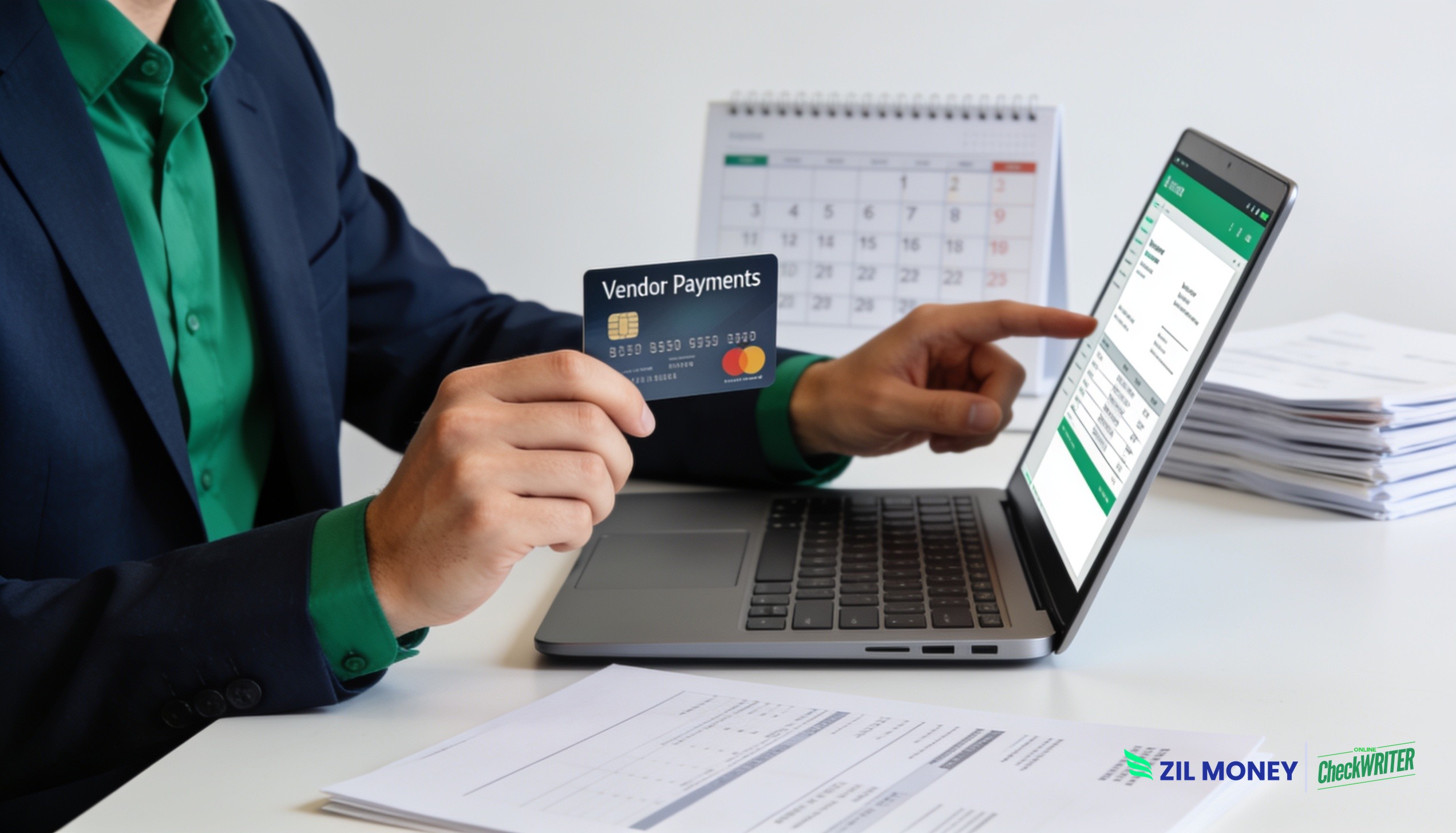
Cash flow rarely fails because a business is unprofitable. It fails because money leaves before it comes in. When you pay vendors with a credit card, you change that timing in your favor. The bill gets paid today, but the cash stays in your account until the statement is due. Zil Money lets you do this for almost any supplier, even the ones who do not take cards. The result is a simple lever on working capital that most finance teams already have and rarely use.
Paying every invoice directly from your checking account feels simple. In practice, it quietly works against your cash position.
Money leaves too early. The moment you send an ACH or mail a check, the cash is gone. You lose the days between paying the bill and collecting from your own customers. Over a month of invoices, that gap adds up.
Tight weeks force hard choices. When receivables run late, you delay a vendor, skip a discount, or dip into a reserve. None of these are good options. Each one costs you goodwill or money.
Checks invite fraud. Checks remain the payment type most often targeted by criminals. In the 2025 AFP Payments Fraud and Control Survey, 79% of organizations reported they were hit by payments fraud attempts in 2024. Paper sitting in the mail is part of the problem.
No built-in float. A bank transfer offers zero grace period. There is no statement cycle working for you, so every payment is a same-day cash outflow whether you can spare it or not.
Thin records. Direct transfers often lack a clean, searchable trail tied to approvals. When you reconcile at month-end, you piece the story together from memory and bank lines.
Missed rewards. Spending you must do anyway earns you nothing when it flows straight from checking. That is value left on the table every single month.
Pay the bill today, keep the cash until the statement is due, and that gap is free working capital.
How Zil Money Helps You Pay Vendors With a Credit Card
Each fix below maps to a problem above, not to a feature list.
Float that works for you. Run the vendor payment through your card and the cash stays put until your statement closes. Commercial card programs commonly extend payment terms well beyond the invoice date, which spreads your outflows across the month instead of bunching them up. You use this float on bills you were paying anyway.
Pay any vendor, card or not. Most suppliers still want a check or ACH. With Zil Money you pay by credit card while the vendor receives a check, an ACH deposit, or a wire. They never have to enroll or change how they get paid.
A cushion for tight weeks. Because the card carries the payment, a slow receivables week no longer forces you to delay a supplier. You keep terms, protect relationships, and bridge the gap until customer payments arrive.
A clear trail on every payment. Each card-funded vendor payment is logged, categorized, and tied to an approval. Reconciliation gets faster, and month-end stops being a guessing game.
Less paper in the mail. Funding by card and sending digitally where possible keeps fewer checks in circulation. That helps narrow the openings fraudsters use, even though no method removes risk entirely.
Rewards on spending you already do. You can earn rewards on eligible payments routed through your card. Routine bulk vendor runs become a source of value rather than a flat cost.
Ready to Put Your Float to Work?
Pay vendors by card and keep your cash where it belongs, right in your account until the statement is due.
Why Payment Timing Matters More Than Ever
Cash-flow timing is the quiet difference between a calm month and a stressful one. The tools to control it are shifting fast. According to the Association for Financial Professionals’ 2025 Digital Payments Survey, 76% of organizations plan to update their payments strategy within the next three years, and the share of B2B payments made by check keeps falling.
That shift rewards finance teams who treat payment method as a lever, not an afterthought. Choosing when cash leaves is as important as choosing how much. A card-funded payment lets you separate the two: the vendor is satisfied today, while your cash works for you a little longer.
The float is not a loan you are chasing. It is a timing advantage built into a tool you likely already hold. Used consistently across your vendor base, it smooths the peaks and valleys that make planning hard. Better yet, it does this without renegotiating a single contract or asking one supplier to do anything differently.
If you want to see how the timing plays out for your own bills, it is worth setting up an account and running one vendor payment through it. Watch where the cash sits and when it actually moves.
Frequently Asked Questions
What does it mean to pay vendors with a credit card?
Can I pay a vendor who does not accept credit cards?
How does paying by card improve cash flow?
Are there rewards for paying vendors this way?
Is card-funded vendor payment secure?
Zil Money is a financial technology company and not a bank. Banking services are provided by our partner bank, Member FDIC. FDIC insurance applies only to eligible products associated with those that have funds held in accounts at the partner bank, subject to applicable limits and requirements.