

 ChatGPT
 Claude
 Grok
Grok
 Perplexity
 Gemini
★ Key Takeaways
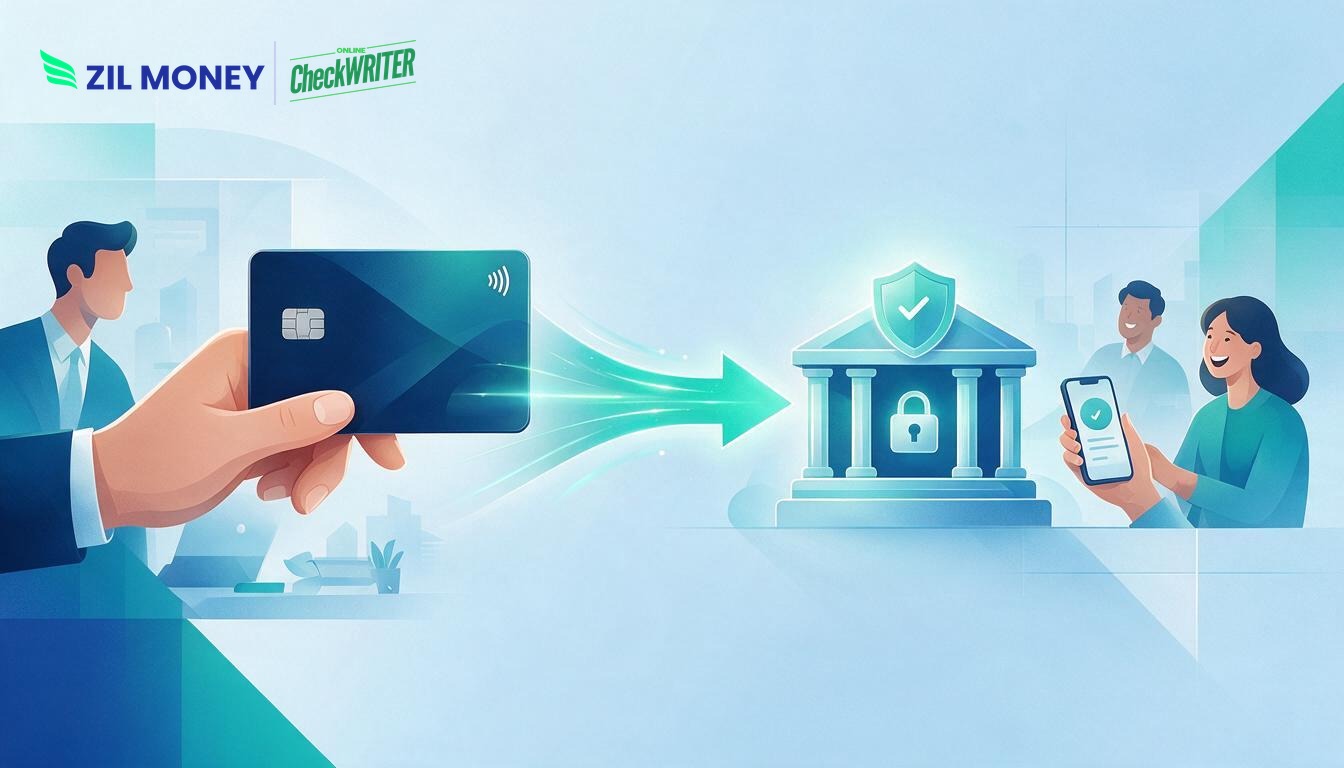
Vendor payments are large, recurring, and predictable. They are exactly the kind of spending that earns the most rewards on a business credit card. The challenge is that vendors like commercial landlords, manufacturers, and freight carriers often accept only bank transfers. An ACH payment with a credit card solves that gap. Zil Money charges the business card and initiates a standard ACH deposit to the vendor bank account. The vendor receives a normal transfer. The business keeps the billing cycle float and earns rewards on eligible payments.
The Real Problems With Paying Vendors by ACH the Traditional Way
Pulling cash directly from the bank account for every large vendor payment creates recurring problems across every billing cycle.
Working capital drains with every large payment. When an ACH payment pulls directly from the business bank account, the cash balance falls immediately. Businesses running high-dollar recurring obligations such as rent, supply orders, and retainer fees feel the impact before the billing cycle closes.
Large vendor payments earn nothing. The highest-dollar items in any accounts payable ledger are usually the ones that generate no rewards. A monthly supply order funded by ACH from a bank account produces no rewards and no billing cycle buffer.
There is no recourse protection on a bank transfer. An ACH payment from a bank account has limited dispute options if there is an error on the vendor side. Credit card transactions come with the dispute framework of the card network.
Manual setup repeats for every new vendor. Entering routing and account numbers, confirming amounts, and scheduling delivery for each payment takes time. Businesses with ten or twenty vendors each month spend that time every cycle without a recurring structure in place.
Reconciling vendor payments and card spend separately doubles the bookkeeping. When large vendor payments leave via ACH and regular expenses go on a card, the bookkeeper maintains two separate records. Every month-end close requires matching both.

How Zil Money Makes ACH Payments With a Credit Card Work
Each fix below addresses a specific problem above.
Charge any major credit card and deliver a standard ACH deposit. Zil Money credit card to ACH payment service accepts Visa, Mastercard, American Express, and Discover. The platform charges the card and initiates the ACH transfer to the vendor bank account. The vendor receives a normal deposit with no setup required on their end.
Keep the billing cycle float on large payments. When a credit card funds the vendor transfer, the cash stays in the business account until the card statement closes. That float, typically 30 or more days, preserves working capital without affecting the vendor payment timeline.
Earn rewards on eligible payments. Business cards that earn rewards or points credit the charge regardless of how the vendor collects. Rent, retainer fees, and supply orders that previously generated nothing can now contribute to the rewards balance on eligible payments.
Schedule recurring transfers and skip the monthly setup. Zil Money supports recurring payment schedules such as weekly, bi-weekly, monthly, and quarterly for credit card-funded ACH transfers. Once configured, the platform charges the card and initiates the transfer automatically on each scheduled date.
Sync every payment to accounting software. Zil Money accounting integrations connect each payment to QuickBooks, Xero, Zoho, and more than 50 other platforms. The card charge and ACH delivery both appear in the ledger without manual entry.
Ready to Pay Vendors With Your Card?
Fund ACH payments with your credit card, hold your cash longer, and earn rewards on eligible spend.
Why ACH and Credit Card Funding Are Growing Together
The volume of B2B payments moving through the ACH Network continues to climb. Businesses processed 8.1 billion B2B ACH payments in 2025, a 9.9% increase from the prior year, according to Nacha. ACH remains the default for large vendor payments because businesses and landlords generally have bank accounts. The working capital advantage that credit card funding adds is what finance teams gain without asking vendors to change anything.
Businesses that make high-dollar recurring payments benefit most. Rent, payroll service fees, insurance premiums, and professional retainers are all fixed obligations that happen every cycle. Funding them with a credit card, instead of pulling cash directly from the bank, keeps more working capital in place and adds rewards on eligible transactions.
Zil Money connects the two methods without additional configuration on either side. The business enters the vendor routing and account numbers once. From there, each ACH payment with a credit card follows the same path: the card is charged, the ACH transfer is initiated, and the vendor payment record syncs to accounting automatically. The vendor receives exactly what they always expected: a standard bank deposit.
Frequently Asked Questions
What is an ACH payment with a credit card?
Does the vendor need to sign up for anything?
How long does the ACH transfer take to arrive?
Can I schedule recurring ACH payments funded by credit card?
Is Zil Money a bank?
Zil Money is a financial technology company, not a bank. Banking services are provided by our partner bank, Member FDIC. FDIC insurance applies only to eligible products associated with those that have funds held in accounts at the partner bank, subject to applicable limits and requirements.