

 ChatGPT
 Claude
 Grok
Grok
 Perplexity
 Gemini
★ Key Takeaways
Yes, you can pay payroll with a credit card through a platform that funds the run by card.
Employees still receive a normal direct deposit or check; the card only funds it.
Card funding buys time when payroll comes due before your receivables arrive.
You may earn rewards on eligible payments while keeping more cash on hand.
A processing fee applies, so weigh it against the cash flow benefit.
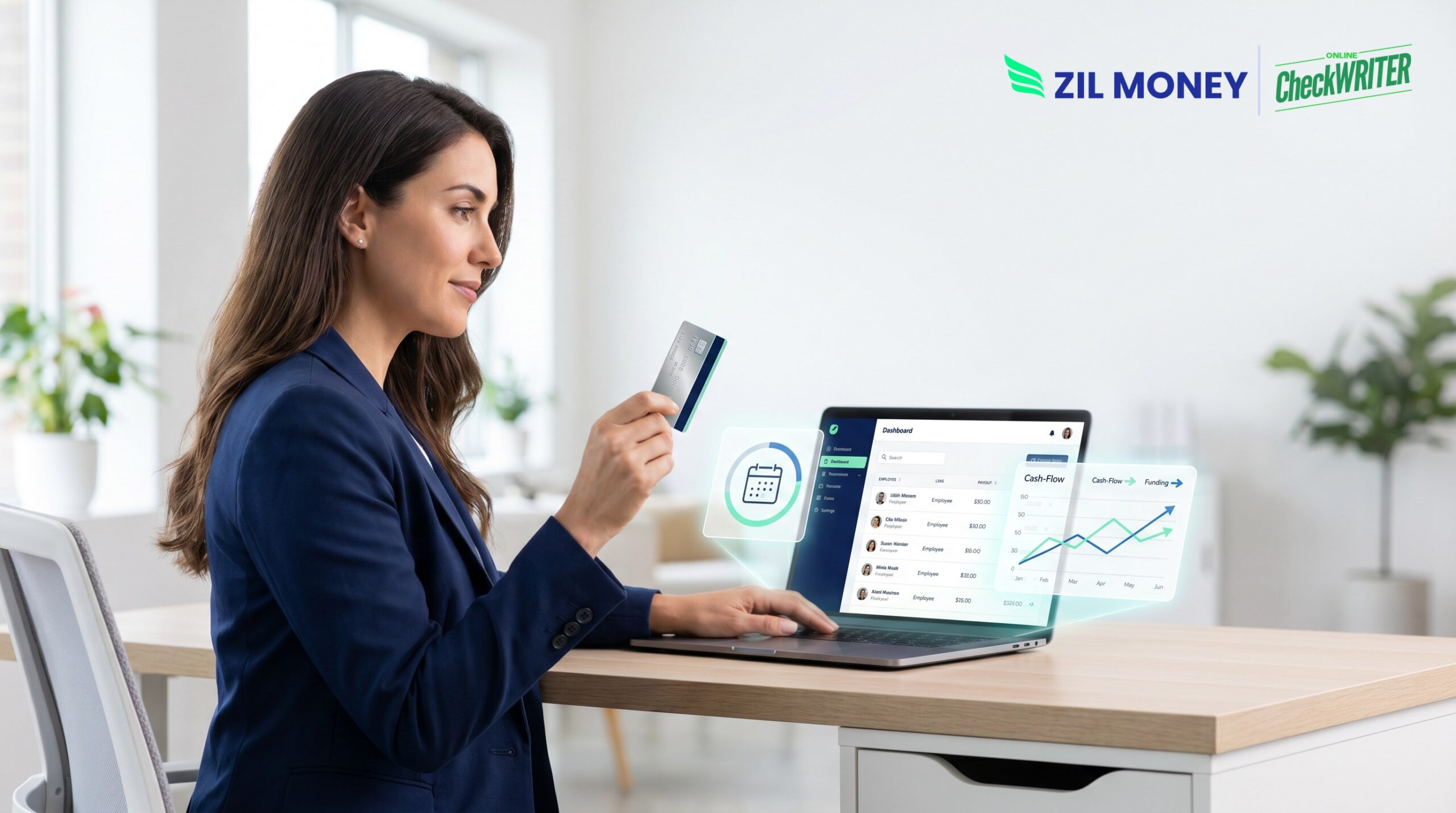
Zil Money connects your card, your payroll file, and your bank in one place.
Can you pay payroll with a credit card? Yes, and for many small businesses it is the difference between making payday and missing it. Payroll often comes due before customer payments land, which leaves a gap. A credit card can bridge that gap when you use a platform that funds the payroll run with your card while employees receive a normal direct deposit or check. Zil Money brings your card, your payroll file, and your bank account together, so the money moves without a scramble.
The Real Problem With Payroll Timing
Payroll is often the largest bill a small business pays, and it never waits. Below are the pressures that push owners to look for a card option.
Payroll lands before receivables: Wages are due on a fixed date, yet invoices get paid whenever the customer decides. As a result, the money going out arrives before the money coming in.
A thin cash buffer: The typical U.S. small business holds a median cash buffer of just 27 days, according to the JPMorgan Chase Institute. So one slow-paying client can put payday at risk.
Employees do not take cards: You cannot hand a worker a credit card number for their wages. Therefore a normal card payment does not solve the problem on its own.
Draining the operating account: Paying wages straight from the bank can leave nothing for rent, suppliers, or taxes. Meanwhile, those bills are due too.
Reserves tied up: Money set aside for payroll cannot work anywhere else. In fact, that idle cash is a cost most owners never measure.
Payday is fixed, but the cash to cover it rarely arrives on schedule.
How Zil Money Lets You Pay Payroll With a Credit Card
Each fix below maps to a problem above, not to a feature list.
Fund the run by card, pay staff normally: With payroll by credit card, you charge the payroll to your card while employees get a standard direct deposit or check. So the timing gap closes without changing how workers are paid.
Pay anyone, even non-card recipients: The same pay by credit card approach works for vendors and bills. Therefore one method covers wages, rent, and suppliers alike.
Keep cash on hand: Card funding lets you hold your bank balance for other needs. As a result, you are not forced to empty the account on payday.
Earn rewards on eligible payments: Running large, recurring bills through a card can earn rewards on eligible payments. Moreover, those rewards are value you were spending anyway.
One connected workflow: Link your bank and route wages by ACH from a single dashboard. Because of that, payroll, vendors, and records stop living in separate tools.
Clear controls and trails: Every payment carries a record you can match to your books later. So reconciliation and approvals stay simple.
Need to Cover Payday Without the Scramble?
Fund payroll with your card while your team gets paid the usual way.
Why Cash Flow Timing Matters for Payroll
Paying wages on time is not just good practice; it protects trust and keeps a team together. Yet the timing rarely lines up. With a median cash buffer near 27 days, most small businesses have little room when a client pays late.
A credit card gives you a controlled way to buy time. Instead of missing payday or taking on a harsher form of debt, you fund the run with a card and settle the balance on your own cycle. The processing fee is a real cost, so weigh it against the value of covering wages and holding your cash. For a recurring, predictable bill like payroll, that trade often makes sense.
Timing still depends on your bank and the rail. Direct deposits usually post in one to two business days, subject to cut-off times and compliance reviews. Zil Money brings the card, the payroll file, and the bank together so payday stays on schedule. Sign up today to see how it fits your cycle.
Frequently Asked Questions
Can you pay payroll with a credit card?
How does paying payroll by credit card work?
Is there a fee to pay payroll with a credit card?
Do employees know payroll was funded by a card?
Zil Money is a financial technology company and not a bank. Banking services are provided by our partner bank, Member FDIC. FDIC insurance applies only to eligible products associated with those that have funds held in accounts at the partner bank, subject to applicable limits and requirements.