

 ChatGPT
 Claude
 Grok
Grok
 Perplexity
 Gemini
★ Key Takeaways
A modern call center payment setup lets agents take payments over the phone with less friction.
Keeping card data out of agents’ hands narrows the openings bad actors look for.
Protected payment links let customers pay themselves, even while on the call.
Centralized records make reconciliation and dispute handling far easier.
The right tools help reduce risk exposure and keep the customer experience smooth.
Take card payments over the phone without slowing your agents down or exposing sensitive card data.
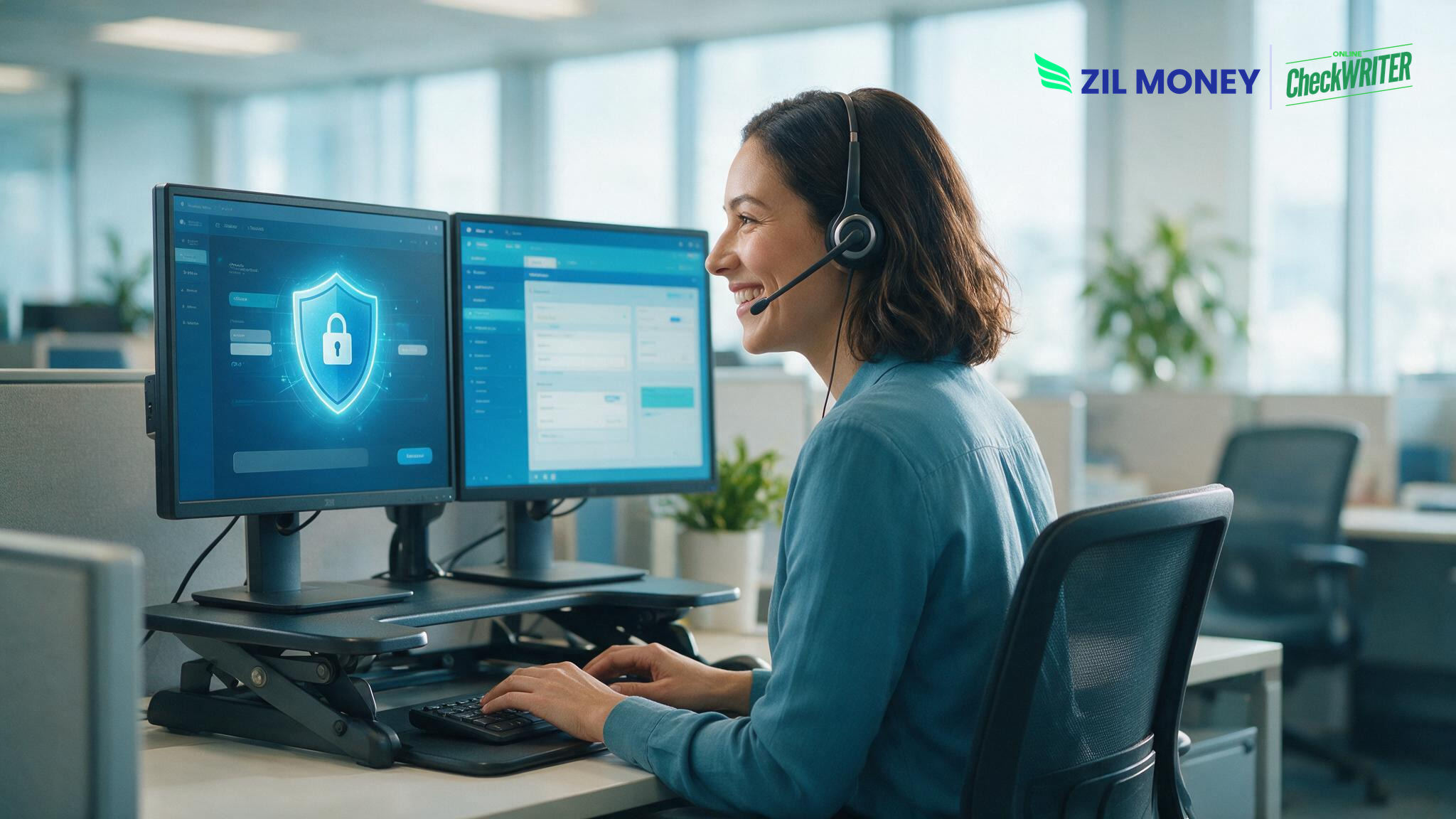
A smooth call center payment process is where customer trust is either earned or lost. Every phone order, renewal, and past-due balance runs through your agents, and each one carries a card number that must be handled with care. When the workflow is clumsy, agents read numbers aloud, callers repeat digits, and sensitive data floats around the floor. Zil Money gives your team a cleaner path. Agents can send a protected payment link or capture a payment without ever holding the raw card details. As a result, calls move faster and your risk goes down.
The Real Problems With Manual Phone Payments
Taking card payments by phone the old way creates friction and risk at the same time. Here is where it breaks down.
Agents handle raw card data. When a caller reads a card number aloud, that data passes through the agent, the call recording, and sometimes a sticky note. Each touchpoint is an opening for exposure.
Phone payments attract risk. Card-not-present transactions are a favorite target. In fact, they carry far higher loss rates than in-person card payments, according to Federal Reserve research, and phone orders sit squarely in that category.
Callers get frustrated. Repeating a long card number, then a security code, then a billing ZIP slows the call. Mistakes force a restart, and patience wears thin.
Records are scattered. When payments come from different tools or get keyed in by hand, matching them to accounts later is painful. Disputes take longer to resolve.
Compliance pressure keeps rising. Storing or voicing card data raises your exposure under card-industry rules. Manual habits make that harder to control.
Send a protected link, let the customer pay, and keep card numbers off the call floor.
How Zil Money Solves These Problems
Each fix below maps to a problem above, not to a feature list.
Keep card data out of agents’ hands. With call center payment tools, agents trigger a payment without reading or storing the raw card number. That means fewer openings for unauthorized use.
Send a protected payment link mid-call. Using payment links, an agent texts or emails a link, and the customer completes payment on their own device while still on the phone. The card never passes through the agent.
Speed up every call. Because the customer enters their own details, agents skip the read-back-and-confirm loop. Calls wrap faster and errors drop.
Centralize the records. Every phone payment lands in one place and can sync with your accounting software. Reconciliation and dispute research get much simpler.
Add layers of control. Approval steps, logging, and protected links work together to help reduce risk exposure and tighten oversight across the team.
Handle Phone Payments With Confidence
Give agents a protected, fast way to collect payments over the phone.
Why Safer Call Center Payments Matter
Phone channels carry real risk, and the data shows it. Card-not-present transactions, the category that phone orders fall into, carry loss rates well above in-person card payments, per Federal Reserve research. A contact center that voices card numbers and stores them in call recordings is exactly the kind of target bad actors look for.
The customer experience matters just as much. A caller who has to repeat a card number three times remembers the friction, not the product. Meanwhile, an agent juggling raw card data is under pressure to be both fast and careful, which is a hard balance to strike by hand.
Moving the actual card entry to the customer solves both problems at once. The caller controls their own data on their own device. The agent stays focused on the conversation. And your business keeps a clean, centralized record of every transaction.
Fortunately, none of this requires tearing out your current phone system. Zil Money layers protected payment tools onto the workflow your agents already run. Sign up today to see how it fits your call center.
Frequently Asked Questions
What is a call center payment?
How does a protected payment link work during a call?
Does this help reduce risk on phone payments?
Can call center payments sync with my accounting software?
Do agents need special hardware to take payments?
Zil Money is a financial technology company, not a bank. Banking services are provided by our partner bank, Member FDIC. FDIC insurance applies only to eligible products associated with those that have funds held in accounts at the partner bank, subject to applicable limits and requirements.